

Understanding the intricacies of solar generator capacity and runtime can significantly optimize your power solutions. Solar generators are becoming indispensable, offering sustainable energy for any household or outdoor adventure. But how does capacity directly correlate with runtime? Knowing this helps you tailor your energy management, ensuring an uninterrupted power supply. Whether you’re using an Anker SOLIX F3800 Plus with up to 3,200W solar input, charging fully in less than two hours, or considering scalability from 3.84kWh to 53.8kWh, matching these specifications to your needs becomes crucial. Dive deep into this guide to uncover how each aspect of solar power generators plays a vital role in balancing capacity with runtime.
What Is Battery Capacity and How Does It Relate to Runtime
Battery capacity is a fundamental element that dictates how long your solar generator can power devices before needing a recharge. It’s measured in watt-hours (Wh), which indicates the amount of energy stored. The higher the watt-hours, the longer the potential runtime, assuming consistent usage. Thus, understanding battery capacity allows you to predict how long your generator will last, based on your power requirements.
Battery Capacity Explained
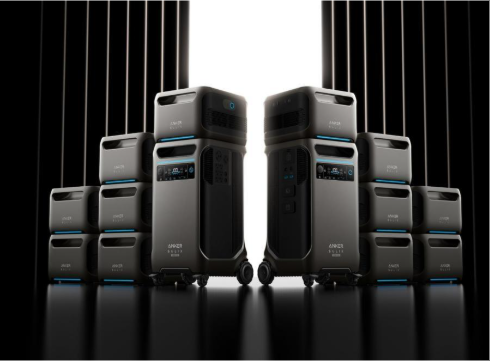
Battery capacity refers to the total amount of energy a battery can store. Expressed in watt-hours (Wh), it accounts for how much power can be drawn over time. A battery with a capacity of 1000Wh can deliver 1000 watts of power for one hour or 500 watts for two hours. The Anker SOLIX F3800 Plus, for instance, starts at 3.84kWh, making it suitable for common household needs. Expandable options further enhance versatility, ensuring that whether your needs are small or large, there’s room for adjustment. Managing capacity efficiently ensures that your devices run smoothly. Without sufficient capacity, interruptions are more frequent, understanding your required capacity is critical.
Watts vs Watt-Hours: The Difference
Understanding the difference between watts and watt-hours clarifies how power and energy are measured and consumed. Watts (W) measure the rate of power used at any given moment, while watt-hours (Wh) represent the total energy consumed over time. For instance, a device rated at 100W running continuously for 10 hours will use 1000Wh of energy. It’s like comparing speed (watts) to distance (watt-hours). The Anker SOLIX F3800 Plus can transform up to 3,200W of solar power efficiently. Knowing how many watt-hours your devices consume helps plan your generator’s usage and avoid outages, enhancing energy management.
Factors That Change Real Runtime Apart from Capacity
Other crucial factors, beyond just capacity, affect a solar generator’s runtime. These include the efficiency losses from inverters and how power is used by connected loads. Understanding these influences ensures your solar setup runs optimally.
Inverter and Efficiency Losses
Inverters are essential for converting DC power from solar panels or batteries into AC power, which most appliances use. However, this conversion isn’t 100% efficient; some energy is lost in the process. Typical inverter efficiency ranges from 85% to 95%. Therefore, a significant portion of stored energy is lost before it reaches your devices, slightly reducing actual runtime. Opting for high-efficiency inverters is beneficial. The Anker SOLIX F3800 Plus reduces these inefficiencies, ensuring more of your stored energy is usable. Calculating these losses helps fine-tune energy plans, maximizing available power.
Load Size and Usage Patterns
The size of the load directly affects runtime. Higher loads consume more power, shortening how long your generator can run. For instance, running a fridge continuously can consume more energy than intermittent use of smaller devices. The constant power drain requires a larger capacity battery for the same runtime. Usage patterns—whether you’re running appliances simultaneously or staggered—also play a role. Balancing load by prioritizing essential devices ensures your power lasts longer. Planning usage becomes crucial when using a system like the expandable Anker SOLIX F3800 Plus, aligning output with energy demands efficiently.
Solar Charging and Extending Runtime
Adding solar charging capabilities extends solar generator runtime without additional batteries. Efficient charging maximizes this potential, making usage sustainable even during prolonged outages.
Adding Solar Input to Extend Runtime
Incorporating solar input effectively extends runtime. With advancements like those in the Anker SOLIX F3800 Plus, which supports up to 3,200W dual 165V solar input, users can recharge quickly under optimal conditions. By harnessing renewable energy, you can sustain operations longer without relying solely on stored capacity. This approach is beneficial for both cost savings and reducing environmental impact. Strategically placing panels for maximum sunlight and choosing the right size can continually replenish battery levels. This not only expands the available power but also brings independence, reducing reliance on grid electricity.
Efficient Charging Tips
To extend your generator’s runtime, adopt efficient charging strategies. Position solar panels at optimal angles to capture maximum sunlight, reducing charge times. Regularly clean panels to ensure they absorb as much light as possible. Additionally, limit power use during peak charging times to allocate power directly to battery replenishment. The Anker SOLIX F3800 Plus’s ability to fully charge in less than two hours under ideal conditions exemplifies how strategic placement and usage substantially impact efficiency. Smart scheduling of energy-intensive tasks during sunlight hours further enhances solar charging efficacy, ensuring power is always available when you need it most.
Conclusion
Solar generator capacity and runtime intricacies significantly affect your power management strategy. Understanding battery capacity, efficiency losses, and usage patterns enables you to optimize runtime effectively. Coupling these insights with advanced products like Anker SOLIX F3800 Plus, featuring scalable and efficient solar inputs, makes it possible to enhance energy backup solutions. By applying efficient charging techniques and carefully planning load distribution, you ensure longer sustainability and reliability of power. Harness the potential of these renewable solutions, achieving your energy needs with confidence and foresight, for a truly uninterrupted energy supply.


