
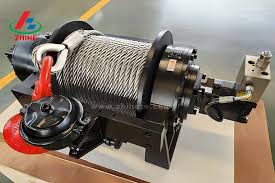
Heavy industry runs on motion. From lifting massive loads at construction sites to controlling precision movements in manufacturing plants, the ability to move, hold, and position weight safely is essential. At the heart of this capability are industrial winches, hoists, and gear systems that translate raw power into controlled, reliable action. While these components often work behind the scenes, their design, engineering, and application play a critical role in keeping entire industries productive and safe.
This article takes a closer look at industrial winches and hoists, the importance of planetary and worm gear systems, and how these technologies come together in heavy machinery equipment used across demanding environments.
Why Industrial Winches and Hoists Matter
Industrial winches and hoists are not simply scaled-up versions of consumer lifting tools. They are purpose-built systems designed to handle extreme loads, operate continuously, and perform under harsh conditions. Whether lifting steel beams, pulling heavy equipment into position, or controlling tension in marine and mining applications, these systems are engineered for reliability.
What sets industrial-grade equipment apart is consistency. A winch or hoist must perform the same way every time, regardless of load size, operating speed, or environmental stress. Failure is not an option when safety, uptime, and cost efficiency are on the line.
Understanding the Core Differences Between Winches and Hoists
Although often grouped together, winches and hoists serve different functions.
Winches are primarily designed for pulling or positioning loads horizontally, though they can also lift in certain applications when properly rated. They rely on a rotating drum that winds a cable, rope, or chain to apply force.
Hoists, on the other hand, are specifically engineered for vertical lifting. They are equipped with braking systems that can hold loads securely in place when motion stops, making them essential for overhead lifting tasks.
Both systems are vital, and in many industrial settings, they work together as part of a larger material handling solution.
The Role of Gearing in Heavy Machinery Equipment
Gearing systems are the unsung heroes inside industrial machinery. They determine how power is transferred, controlled, and multiplied. Two of the most common gear types used in winches, hoists, and heavy machinery are planetary gears and worm gears.
Each serves a specific purpose depending on load requirements, space constraints, and operational demands.
Planetary Gear Systems Explained
Planetary gears are known for their compact design and high load capacity. In this system, multiple planet gears rotate around a central sun gear, distributing the load evenly across several contact points.
This configuration offers several advantages:
- High torque output in a compact footprint
- Improved load sharing, which reduces wear
- Smooth and efficient power transmission
Planetary gears are commonly used in applications where space is limited but performance cannot be compromised. You will often find them in industrial winches, hoists, and mobile heavy machinery that requires both strength and efficiency.
Worm Gear Systems and Their Unique Benefits
Worm gear systems operate differently. A worm, which resembles a screw, meshes with a gear wheel to transmit motion. One of the key benefits of worm gearing is its self-locking capability.
In many configurations, worm gears prevent the load from driving the system backward. This makes them ideal for applications where holding position is critical, such as lifting platforms or equipment that must remain stationary under load.
While worm gears may be less efficient than planetary systems, their simplicity, durability, and safety advantages make them invaluable in specific industrial scenarios.
Matching Gear Systems to Application Needs
Choosing between planetary and worm gear systems is not about which is better overall. It is about selecting the right tool for the job. Engineers consider factors such as load size, duty cycle, required efficiency, available space, and safety requirements.
In some cases, hybrid systems are used, combining different gear types to achieve optimal performance. This level of customization is what allows modern heavy machinery to operate effectively across a wide range of industries.
Heavy Machinery Equipment in Real-World Applications
Industrial winches, hoists, and gear systems are used across countless sectors. In construction, they lift materials to high elevations and position structural components with precision. In mining, they pull heavy loads through challenging terrain and operate continuously in dusty, abrasive environments.
Marine and offshore operations rely on these systems for anchoring, towing, and equipment handling, often under corrosive conditions. Manufacturing facilities depend on them for assembly lines, material movement, and maintenance operations.
In each case, reliability is the common thread. Equipment downtime can halt entire operations, making quality engineering and proper maintenance essential.
Engineering for Durability and Longevity
Industrial environments are unforgiving. Equipment must withstand temperature extremes, moisture, vibration, and constant mechanical stress. This is why materials, coatings, and manufacturing standards matter as much as design.
High-quality winches and hoists use hardened gears, robust housings, and precision bearings to ensure long service life. Proper lubrication and sealing protect internal components from contamination, while rigorous testing verifies performance under real-world conditions.
Safety as a Core Design Principle
Safety is not an afterthought in industrial lifting and pulling systems. It is built into every aspect of design and operation. Load ratings, braking systems, and redundant safety features help protect both equipment and personnel.
Modern systems often include monitoring capabilities that track load, speed, and operating conditions. These features help operators identify potential issues before they become serious problems.
When integrated correctly, industrial winches and hoists provide controlled power that enhances safety rather than introducing risk.
The Importance of Manufacturer Expertise
Behind every reliable piece of heavy machinery is a manufacturer with deep technical expertise. Experience matters, especially when designing equipment for specialized or high-risk applications.
Manufacturers who understand industry standards, application challenges, and long-term performance requirements are better equipped to deliver solutions that last. This is where trusted names and proven engineering practices make a measurable difference.
In this context, solutions such as WPT Power industrial winches are often referenced for their ability to integrate robust gearing, reliable power transmission, and application-specific design into demanding industrial systems.
Maintenance and Lifecycle Considerations
Even the best equipment requires proper care. Routine inspections, lubrication, and part replacements help extend the lifespan of winches, hoists, and gear systems.
Planning for maintenance from the start reduces unexpected downtime and protects long-term investment. Many industrial operators now focus on total lifecycle cost rather than just initial purchase price, recognizing that reliability and serviceability pay dividends over time.
How Technology Is Shaping the Future of Industrial Lifting
Advances in materials science, digital monitoring, and automation are changing how heavy machinery equipment is designed and operated. Smart sensors can provide real-time data on load conditions, temperature, and wear patterns.
These insights allow for predictive maintenance, reducing the risk of sudden failures. At the same time, improved manufacturing techniques are producing stronger, lighter components that enhance performance without sacrificing durability.
As industries continue to evolve, winches, hoists, and gear systems will adapt to meet new challenges and efficiency goals.
Choosing the Right Equipment for Your Operation
Selecting industrial lifting and pulling equipment is not a one-size-fits-all decision. It requires a clear understanding of application needs, environmental conditions, and performance expectations.
Working with experienced engineers and suppliers helps ensure that the chosen system aligns with both current requirements and future growth. When properly matched, industrial winches and hoists become reliable partners rather than potential points of failure.
Final Thoughts on Industrial Power Systems
Industrial winches, hoists, and gear systems form the backbone of modern heavy machinery. They convert power into controlled motion, enabling industries to build, move, and innovate at scale.
By understanding the roles of planetary and worm gear systems, appreciating the importance of engineering quality, and prioritizing safety and maintenance, businesses can make informed decisions that support long-term success.
As heavy industry continues to push boundaries, dependable power transmission solutions, including options like WPT Power industrial winches, will remain essential to keeping operations moving forward with confidence.


