
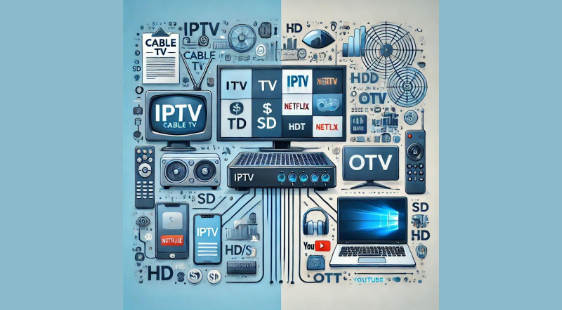
In today’s digital entertainment world, choosing between IPTV, cable, and OTT streaming depends on what matters most—cost, flexibility, or content variety. Cable TV still appeals to traditional viewers, but IPTV and OTT platforms are redefining how audiences consume television. For example, many users are switching to Indian IPTV because it combines affordable pricing with diverse channels and high-quality streaming across multiple devices.
1. Understanding the Basics
Cable TV delivers live channels through physical cables such as coaxial or fiber lines. It’s consistent and stable but often limited to certain regions and bound by contracts.
IPTV (Internet Protocol Television) uses the internet to stream live and on-demand television. It allows viewers to access channels globally through apps, smart TVs, or set-top boxes, offering flexibility and control over what and when to watch.
OTT (Over-the-Top) streaming services like Netflix, Hulu, or Amazon Prime Video operate entirely online. They deliver content directly to users without relying on traditional broadcasters, focusing mostly on movies, shows, and exclusive productions.
2. Cost Comparison
Price is often the deciding factor. Cable subscriptions are typically bundled with installation fees, taxes, and equipment rentals. In contrast, IPTV services are subscription-based, transparent, and more affordable. They often offer month-to-month flexibility without hidden costs.
OTT platforms seem inexpensive at first, but subscribing to multiple services for varied content can add up. Users who need both live TV and on-demand entertainment often find IPTV’s hybrid model more economical than juggling several OTT apps.
3. Content Variety and Access
Cable TV provides a stable lineup of local and international channels, with strong coverage of live sports and news. However, it lacks flexibility and often excludes niche regional content.
IPTV stands out because it delivers both global and regional channels. It supports live TV, catch-up shows, and even pay-per-view events. Users can also access international packages—ideal for multilingual households.
OTT services emphasize entertainment through curated libraries and original content. While perfect for binge-watchers, they fall short for those who want real-time broadcasts.
4. Regional Streaming and Localization
Regional programming has become essential for global audiences. Many IPTV providers have embraced localized content to cater to language-specific viewers. Services like Telugu IPTV offer channels dedicated to Telugu movies, music, and news, filling a major gap left by generic global platforms. This localization ensures cultural relevance while maintaining streaming quality comparable to major OTT brands.
5. Quality and Reliability
Cable TV’s signal reliability is strong because it doesn’t depend on internet speed. However, image quality can fluctuate, especially in older setups. IPTV and OTT rely entirely on bandwidth—meaning that a stable high-speed connection ensures crisp HD or 4K output.
Modern IPTV technology uses adaptive bitrate streaming, automatically adjusting quality to prevent buffering. OTT platforms apply similar methods but may throttle performance when server load increases. IPTV providers focused on live channels often optimize specifically for continuous broadcast stability.
6. Flexibility and User Experience
Traditional cable TV limits how and when you can watch content. IPTV and OTT have revolutionized that model. IPTV offers live pause, rewind, and DVR-like recording features. OTT platforms add portability—you can watch on mobile, tablet, or laptop anytime.
For households that want both scheduled programming and freedom of choice, IPTV offers the best middle ground. Users can enjoy live channels while also accessing video-on-demand libraries within the same interface.
7. Device Compatibility and Integration
Cable services usually require a dedicated box, but IPTV and OTT platforms integrate seamlessly with smart TVs, streaming sticks, and gaming consoles. IPTV apps often support multiple devices under one subscription, while OTT accounts can sync across devices with personalized recommendations.
Many IPTV setups also integrate voice commands and AI recommendations, similar to premium OTT apps—bringing a smart, interactive edge to live TV.
8. Future of TV Entertainment
The future clearly leans toward internet-based delivery. As 5G networks expand, IPTV and OTT will become even smoother, offering near-zero buffering and instant channel switching. Artificial intelligence will enhance personalization, recommending programs based on viewing habits.
Cable operators are already pivoting to hybrid IPTV-OTT models to stay relevant. The next decade will likely see IPTV become the primary source for both live and on-demand content, bridging convenience, affordability, and choice.
9. Conclusion
When comparing IPTV, cable, and OTT streaming, there’s no universal winner—it depends on your preferences. Cable offers reliability, IPTV delivers flexibility and live regional content, and OTT brings global on-demand entertainment. For most viewers, IPTV represents the perfect balance: live TV plus internet freedom.
Platforms like Indian IPTV and regional services such as Telugu IPTV highlight how digital entertainment is evolving toward personalization, accessibility, and affordability. The future of television belongs to those who demand control—what to watch, when to watch, and how to watch it.